

A member of the public has reported seeing a ‘brown or tawny, dark-coloured’ big cat diving into fields near Mold.
The encounter took place just four days ago, at around 7pm on Thursday 28th January. The animal was far too big to be a dog, had a thin, long tail and was spotted on Bryn Road in Mynydd Isa.

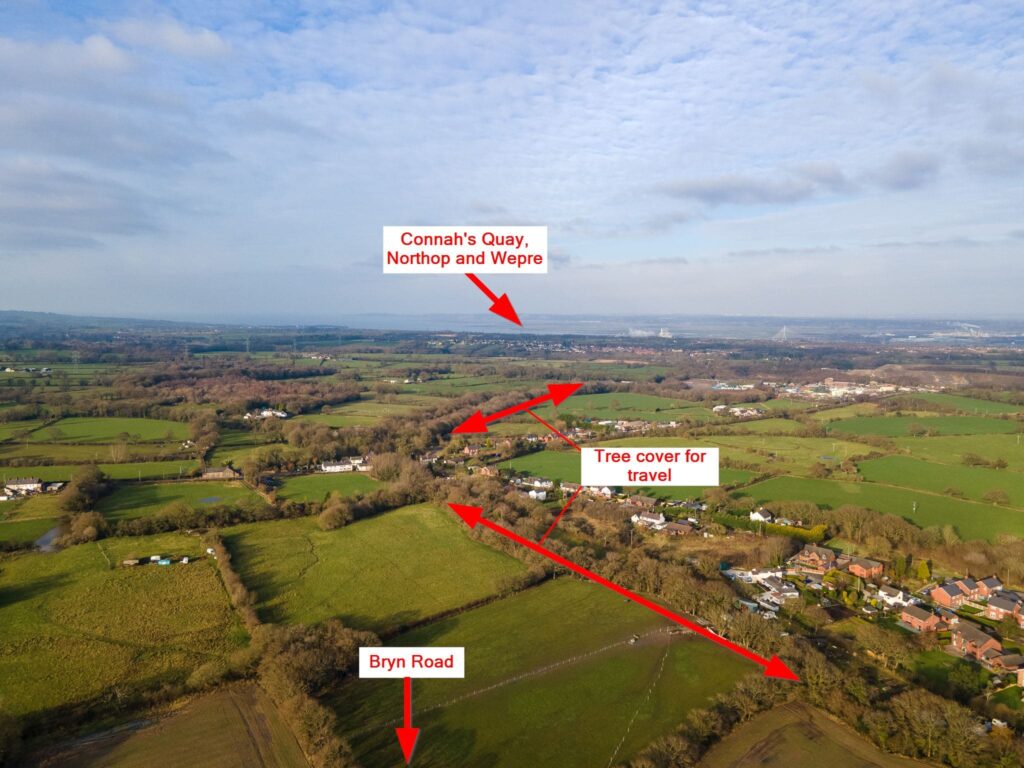
Puma Watch has since visited the location to investigate the report and search for any signs of a big cat. After surveying the terrain with the Puma Watch recon drone, we were able to identify potential routes a big cat could take to cross the fields and hedgerows, and multiple sets of large pawprints were found (images below).
The witness, who provided their name to Puma Watch but asked to remain anonymous, told us: “At first, I thought it was a fox, but thinking more about it, it was just too big and had a long thin tail. It was definitely dark in colour and disappeared into the field so it wouldn’t have been a dog.
“It was the size and long tail which genuinely makes me sure it wasn’t a fox.”

Bryn Road, where the animal was spotted, connects Mynydd Isa and Bryn-y-Ball with Buckley, and has fields, woods and common land adjoining both sides of the road for much of its length.
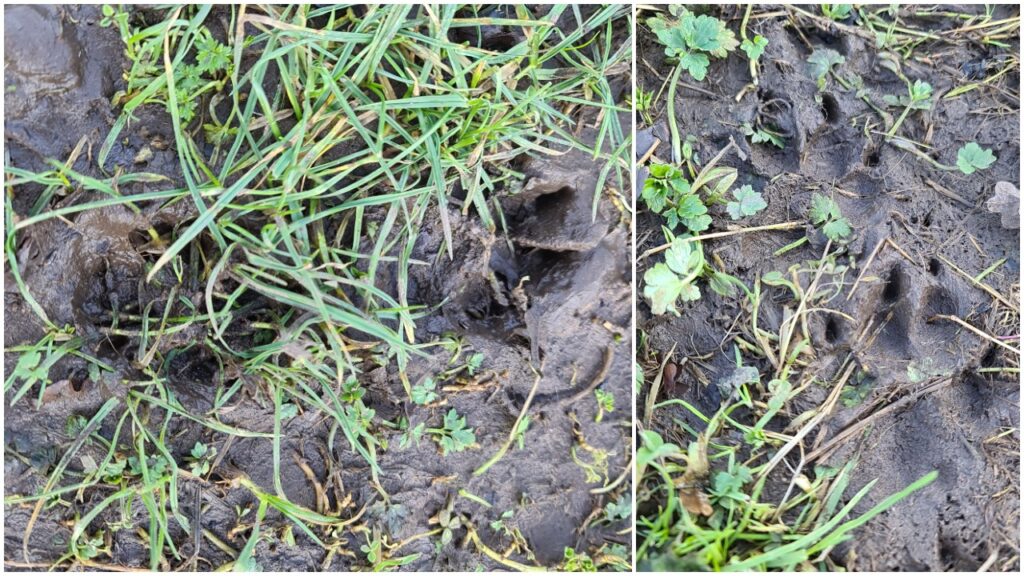
Multiple sets of large pawprints were found. It’s always hard to be definitive about what type of animal made a particular set of prints and while sometimes visible claw marks can suggest it would have been a dog, cats will often leave their claws extended when walking in soft mud, snow or sand to assist their grip.
We’d often use the presence of human footprints to rule out prints as someone walking a dog, but none were found anywhere nearby. Additionally, these prints were found in an enclosed area, where it’s unlikely a dog would have been running free.
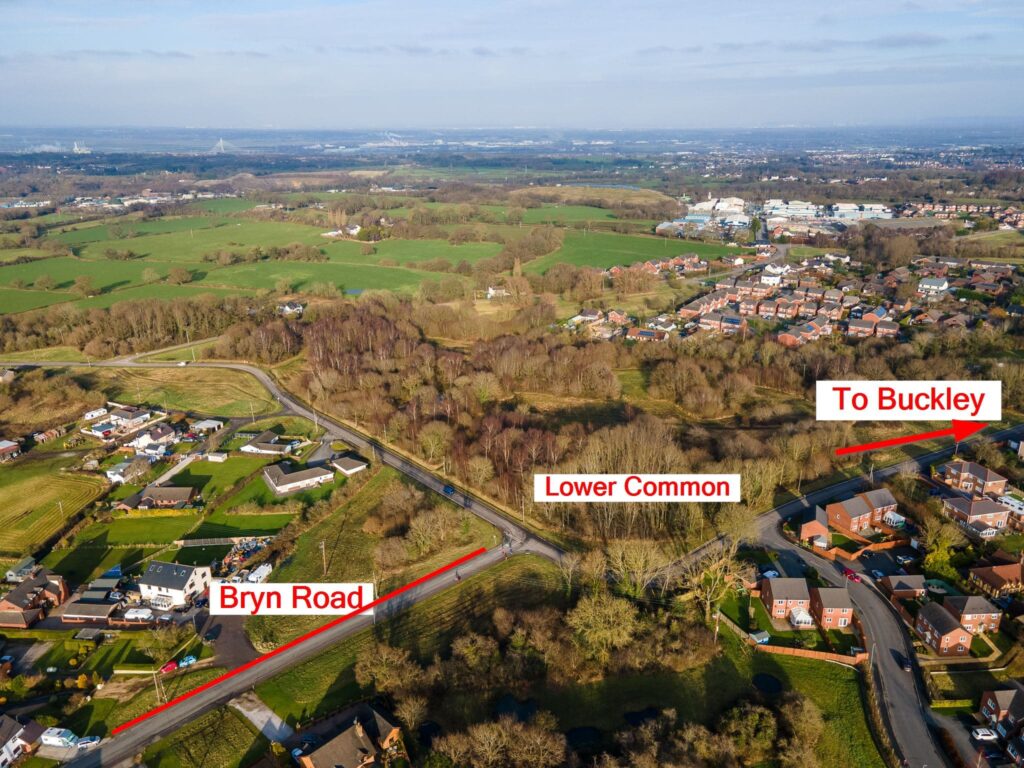
The aerial images show how a big cat would be afforded plenty of cover from trees and substantial hedgerows, allowing it to move freely around the area. It would also likely be able to linger undetected in the dense undergrowth of Buckley’s Lower Common.
Big cats such as pumas are solitary with a hunting range of dozens of miles. They’re mostly spotted in Snowdonia and the Clwydian hills but reports of sightings in urban locations some distance from these areas are becoming more frequent.
Dozens of sightings have occurred in Flintshire since the summer, with many happening on Halkyn Mountain or near Pontybodkin – both just a few miles either side of Mold. Big cats have also been reported in Connah’s Quay.
As seen with Llandundo’s now-famous goats, who have taken to roaming the town’s deserted streets during the coronavirus lockdowns, it’s likely that the reduced levels of human activity over the last year is encouraging big cats to roam further from the hills into more populated areas.
When big cats were banned as pets in the 1970s, it was legal to release them into the countryside to avoid expensive rehoming costs. Owners from across the UK travelled to areas like Wales to release their cats in the remote environment, where small but significant populations have thrived ever since.