
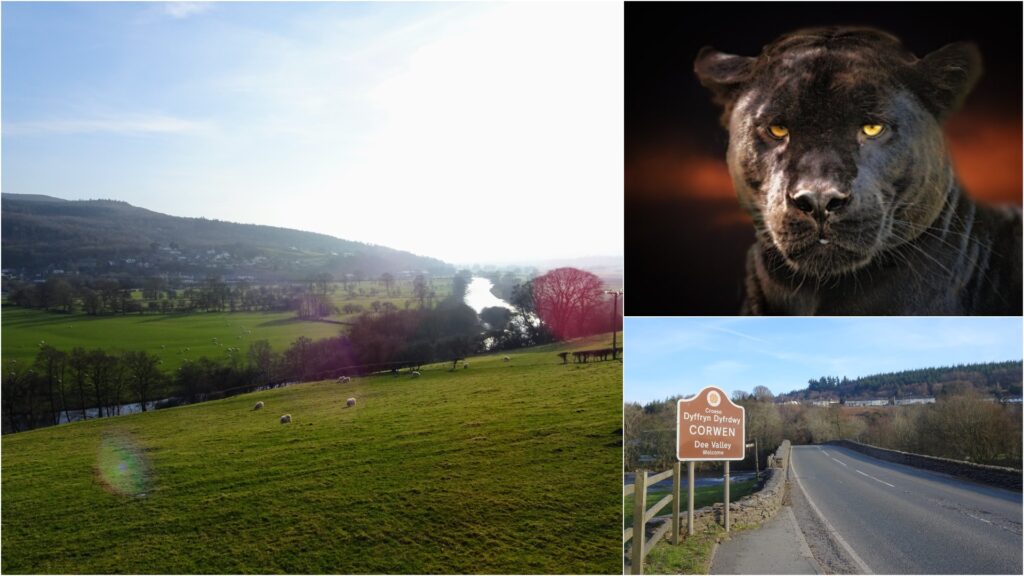
A resident of the hills near Corwen has contacted Puma Watch after a “large black creature” ran towards her at around 10:30 PM on Monday 31st May.
Kim says the animal, which she believes could have been a puma, stopped once it saw her then turned and ran away.
Kim, who asked us not to publish her surname, told Puma Watch: “Going out to the washing line alone, I saw a large black creature running toward me (there were sheep lying down behind me.)
“I was transfixed and just stared. It stopped when it saw me and turned around and ran toward the gate, not like a cat and nothing like a dog. I walked back as calmly as I could but I was shaking inside.
“I locked all the windows and left the washing outside, hoping it only comes out at night and thanked God I hadn’t gone the trees way.”

Along the Dee Valley towards and beyond Llangollen, there have been multiple big cat sightings in recent weeks. At Cefn Mawr, a big cat was caught on camera on the banks of the River Dee. Within 48 hours, other witnesses spotted what could have been the same animal at Chirk McDonalds and near Oswestry.
Back in December, Corwen made the headlines after Dee Forbes caught a big cat on video. It was strolling along a heritage railway line in the town centre.
Big cats such as pumas are solitary with a hunting range of dozens of miles. They’re mostly spotted in Snowdonia and the Clwydian hills but reports of sightings in urban locations some distance from these areas are becoming more frequent.
As seen with Llandundo’s now-famous goats, who have taken to roaming the town’s deserted streets during the coronavirus lockdowns, it’s likely that the reduced levels of human activity over the last year is encouraging big cats to roam further from the hills into more populated areas.
Earlier this year, the Welsh Government responded to the recent spate of sightings and confirmed the steps they take to investigate any reported to them, including taking casts of paw prints.
When big cats were banned as pets in the 1970s, it was legal to release them into the countryside to avoid expensive rehoming costs. Owners from across the UK travelled to areas like Wales to release their cats in the remote environment, where small but significant populations have thrived ever since.