

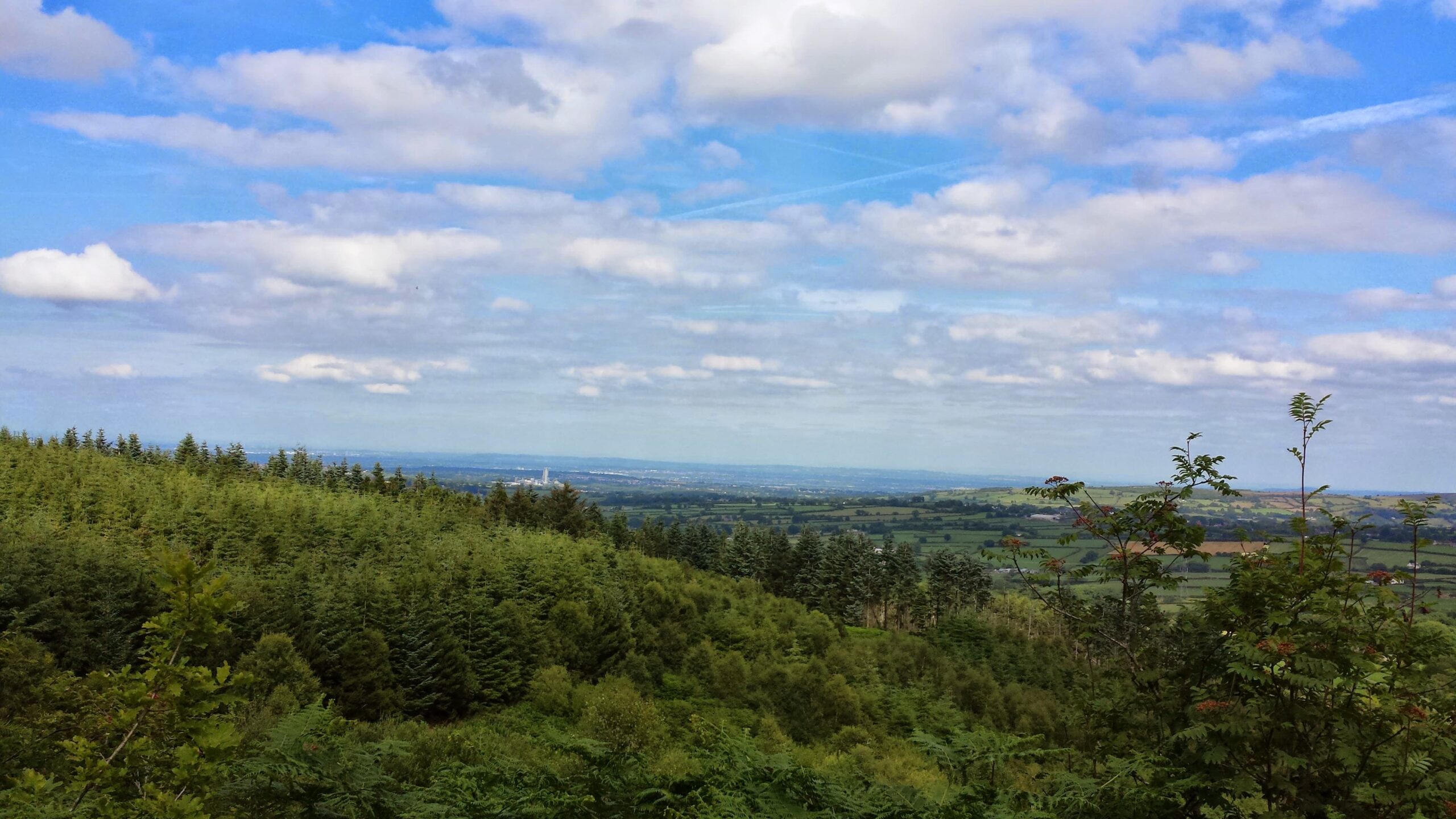
A walker has reported spotting what they believe might have been a puma in Nercwys Forest, a large, popular woodland in the Clwydian hills above Mold.
Sophie stopped for a drink on her way around the forest’s circular trail when she spotted the ‘jet black’ creature cross the path ahead of her.
She says the animal, which she spotted around 5PM on Wednesday 3rd February, was much bigger than any dog or domestic cat and emphasised the length of its tail.
Sophie told Puma Watch: “[I] was walking through the foot trail and stopped for a drink and was looking down the footpath and all I seen was this big cat-like figure literally run across the path, it was jet black with a long tail and it was too big to be a dog or a cat.
“It was clear it was a large animal with a long tail.”

Historically a heather moorland, a conifer forest was planted at Nercwys in 1965 as part of the post-war effort to become self-sufficient in timber as a nation. Since then, much work has gone into improving the forest for wildlife by creating more varied habitats within the plantation.
Patches of woodland have been cleared and thinned to create more grassy areas, attracting ground-nesting birds, flowers and butterflies.

Big cats such as pumas are solitary with a hunting range of dozens of miles. They’re mostly spotted in Snowdonia and the Clwydian hills but reports of sightings in urban locations some distance from these areas are becoming more frequent.
As seen with Llandundo’s now-famous goats, who have taken to roaming the town’s deserted streets during the coronavirus lockdowns, it’s likely that the reduced levels of human activity over the last year is encouraging big cats to roam further from the hills into more populated areas.
Earlier this year, the Welsh Government responded to the recent spate of sightings and confirmed the steps they take to investigate any reported to them, including taking casts of paw prints.
When big cats were banned as pets in the 1970s, it was legal to release them into the countryside to avoid expensive rehoming costs. Owners from across the UK travelled to areas like Wales to release their cats in the remote environment, where small but significant populations have thrived ever since.
Earlier this month, Bellingcat exposed an international exotic pet trafficking operation, in which Instagram celebrities posted videos with animals including monkeys, sloths and a range of big cats, including baby tigers, cheetahs, lions and pumas. The animals were sold to buyers around the world from a base in Dubai.
Also this month, a London man was fined after neighbours spotted he was keeping an African wildcat at his home. He purchased the animal from an unlicensed Russian company. The man had previously been reported to authorities but had told them he didn’t own the animal before eventually being caught red-handed.
It’s likely that many illegal owners in similar situations would release such animals into the British countryside. This prevalent underground trade, now fuelled by Instagram and social media, could be big a big part of explaining why so many big cat sightings are now being reported.
Image credits:
Black cat image by Steve Wilson under CC-BY-2.0.